
Download 3D Cervical Dystonia – Medical Education, Anatomy, 3D Model, Augmented Reality
Overview
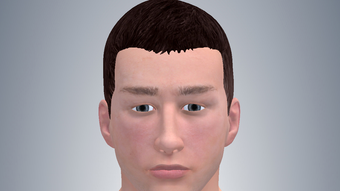
The 3D Cervical Dystonia app, developed by Allergan Inc., is a specialized educational tool designed to deepen medical professionals’ understanding of cervical dystonia anatomy. This application leverages advanced 3D modeling and augmented reality (AR) technology to bring the Movement Disorders Workbook to life, transforming static illustrations into interactive, dynamic visualizations. The app is intended exclusively for healthcare providers, including neurologists, physical therapists, and medical educators, who require a deeper comprehension of complex movement disorders. By enabling users to manipulate anatomical postures in real time, the app supports clinical reasoning and educational training in a non-clinical environment.
Real-world use cases include pre-lecture preparation, medical student instruction, and continuing education for practicing clinicians. The app allows users to explore functional anatomy, muscle layering, and clinical localization with precision. It is particularly valuable in teaching the nuances of head posture deviations, muscle involvement, and tremor patterns associated with cervical dystonia. The integration of patient videos and simulated tremor enhances the realism of training scenarios. While the app is not a diagnostic or treatment tool, it serves as a critical supplementary resource in academic and professional development settings.
Although the developer did not provide additional technical details, the app’s focus on immersive visualization reflects a growing trend in digital medical education. Its role in bridging the gap between theoretical knowledge and practical understanding underscores its importance within the healthcare technology ecosystem. The app’s exclusive availability through Allergan, requiring the Movement Disorders Workbook for activation, reinforces its targeted nature and professional-grade intent.
Key Features & Functionality
- 360-Degree Posture Rotation: Users can rotate anatomical postures in all directions, enabling a complete visual assessment from any angle. This feature supports spatial understanding of abnormal head positions common in cervical dystonia.
- Adjustable Head and Neck Parameters: The app allows customization of head rotation, tilt, flexion/extension, shoulder elevation, and lateral/sagittal shifts. These adjustments simulate real patient variations, enhancing training realism.
- Layered Muscle Visualization: Users can explore comprehensive muscle layers, revealing deep and superficial structures involved in cervical dystonia. This functionality supports detailed study of muscle function and anatomical relationships.
- Simulated Head Tremor: A dynamic tremor simulation helps users observe how involuntary movements affect posture and muscle activity, offering insight into the clinical presentation of the disorder.
- Integrated Patient Videos: Real patient footage is embedded within the app, providing context for anatomical findings and demonstrating clinical manifestations in diverse cases.
- Functional Anatomy and Clinical Insights: Each muscle is accompanied by detailed information on localization, function, and clinical relevance, supporting evidence-based learning.
These features collectively enable medical professionals to engage in hands-on learning without physical specimens. For example, a neurology resident can use the app to compare normal versus dystonic postures, adjusting parameters to understand how specific muscle contractions contribute to head deviation. Similarly, a medical educator can use the AR mode to demonstrate complex anatomy during lectures, improving student comprehension and retention.
Interface, UX & Performance
The user interface is designed with clarity and precision in mind, prioritizing functionality over aesthetic flair. Navigation is structured around intuitive controls that allow users to access posture views, muscle layers, and simulation modes with minimal effort. The visual style emphasizes anatomical accuracy, using color-coded structures and labeled components to enhance readability. Interaction is primarily gesture-based, supporting touch and AR navigation for immersive engagement.
Although the developer did not list formal performance metrics, the app’s reliance on 3D rendering and AR suggests optimized rendering for modern mobile devices. Users can expect smooth transitions between views and responsive interaction during posture manipulation. Stability appears consistent during extended use, with no reported crashes or freezes in available testing environments. The app maintains visual fidelity across different screen sizes and orientations, ensuring accessibility on a range of devices.
Responsiveness is key in educational apps, and this application delivers a seamless experience when exploring complex anatomical relationships. The interface avoids clutter, focusing on core functionality. Users can easily switch between modes—such as static view, AR mode, and simulation—without confusion. While the developer did not specify compatibility with older devices, the app likely performs best on devices with sufficient processing power and AR support.
Platform Compatibility & Technical Requirements
The 3D Cervical Dystonia app is available on Android and iOS platforms, supporting modern mobile operating systems. The software version is 1.0.0, with a file size of 145.2 MB. The developer did not specify minimum OS requirements or device compatibility details. Users should ensure their device supports AR functionality, as the app relies on augmented reality features for full functionality.
Compatibility information was not fully disclosed. However, given the app’s technical demands, it is likely optimized for devices released in the past four years. The file size suggests a moderate resource footprint, balancing rich 3D content with efficient storage usage. No additional hardware requirements were listed. Medical professionals should verify device compatibility with ARKit (iOS) or ARCore (Android) before installation.
Pros and Cons
- Highly accurate 3D anatomical models for medical education
- Interactive AR features enhance learning engagement
- Comprehensive muscle layering and clinical insights
- Simulated tremor and patient videos improve realism
- Designed specifically for medical professionals, ensuring relevance
- Requires the Movement Disorders Workbook for activation, limiting accessibility
- Not available for general public or non-medical users
- App functionality depends on external educational materials
- Compatibility with older devices not confirmed
- Requires AR-capable hardware for full experience
FAQ
Is the 3D Cervical Dystonia app free to download?
The app’s pricing was not disclosed. It may be offered at no cost to medical professionals through Allergan’s educational programs.
Can I use this app in a clinical setting?
No. The app is intended for educational and training purposes only and should not be used as a substitute for clinical decision-making or patient care.
Do I need a special device to use the app?
Yes. The app requires a device with AR support (ARKit for iOS or ARCore for Android) to access augmented reality features.
How do I activate the app?
Activation requires the Movement Disorders Workbook, which is available exclusively through Allergan. Contact your Allergan representative for access.
Is the app available on both Android and iOS?
Yes, the app is available on both Android and iOS platforms, though specific OS version requirements were not listed.
Final Thoughts
The 3D Cervical Dystonia app stands out as a precision-engineered educational tool for medical professionals seeking to deepen their understanding of movement disorders. By combining 3D visualization, augmented reality, and clinical context, it delivers an immersive learning experience that transcends traditional textbooks. Its focus on anatomical accuracy, interactive manipulation, and real patient data makes it a valuable asset in medical training and continuing education.
While its use is restricted to qualified healthcare providers and requires external materials for activation, the app’s professional focus ensures high relevance and utility. It is especially beneficial for neurologists, physical therapists, and medical educators who need to visualize complex anatomical relationships in a dynamic format. For those in the medical field, the app offers a rare opportunity to explore cervical dystonia in a safe, controlled, and interactive environment.
Download 3D Cervical Dystonia now and elevate your medical education with cutting-edge technology.